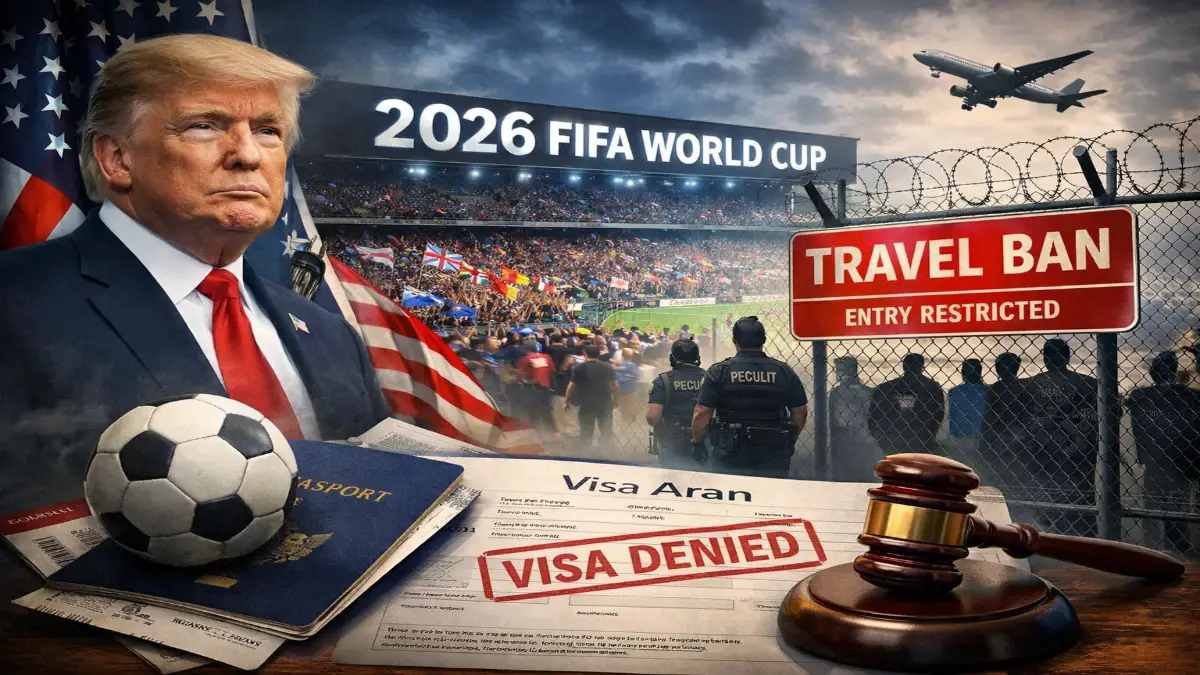
The Broader Visa Restrictions under the Trump Administration
Since returning to office, President Donald Trump’s administration has implemented significant travel restrictions and tightened visa policies for many foreign nationals. These measures include expanded bans affecting a large number of countries and stricter screening requirements for a wide range of visa categories.
The stated goals of these policies are to enhance national security and ensure that immigrants entering the United States meet certain economic and legal standards. However, critics argue that these restrictions disproportionately affect people from specific regions and could have long-term cultural and economic consequences.
The 2026 World Cup Context
The United States, Canada, and Mexico are co-hosting the 2026 FIFA World Cup — one of the world’s largest sporting events. With millions of international visitors expected, the intersection of travel policy and global enthusiasm for the tournament has generated significant discussion.
For athletes, teams, and essential support personnel participating in the World Cup, the U.S. administration has outlined exemptions from certain travel bans. These exemptions aim to allow competitors, coaches, and related staff to enter the country for the duration of the competition without being hindered by the broader visa restrictions.
Despite exemptions for participants, spectators, media representatives, team supporters, and corporate partners are still subject to the general visa rules. This means that fans from countries affected by travel bans or enhanced vetting procedures may experience challenges when applying for visas to attend World Cup matches or related events.
Challenges and Diplomatic Tension
This combination of exemptions for sports professionals alongside ongoing restrictions for general visitors has created a degree of confusion and frustration among fans and officials alike. Supporters of teams from restricted countries worry that their ability to join fellow fans at matches could be limited, even as their national teams compete.
Some national governments and fan organizations have expressed concern about the potential barriers their citizens may face, leading to diplomatic discussions around how best to facilitate attendance while respecting host-nation policies.
Impact on Global Mobility and Policy Perception
The travel and visa policies under the Trump administration are part of a broader shift in U.S. immigration and border control strategy. These changes have included increased scrutiny of visa applicants, expanded criteria for admissibility, and higher rates of visa revocations.
Experts have noted potential economic impacts, particularly in sectors like tourism and international business, where ease of travel plays a significant role. Additionally, heightened restrictions have occasionally prompted reciprocal measures from other countries, affecting bilateral travel for citizens on both sides.
In the context of global events like the World Cup, these broader policy choices shape both perception and participation. The world’s attention on the United States during the tournament heightens scrutiny of how welcoming the host nation will be to visitors from all backgrounds.
Conclusion
As the 2026 FIFA World Cup draws nearer, the interplay between national travel policy and international sporting engagement remains a key topic of global interest.
The Trump administration’s approach reflects a balance between protecting national priorities through tightened immigration measures and supporting major international events with necessary exemptions for competitors and essential personnel.
For fans and travelers from countries with heightened restrictions, uncertainty persists. Whether and how many supporters will successfully secure visas to attend matches remains one of the most discussed aspects of the tournament’s preparation.